History of Broadcast News
(New York Film Academy)
Download Document:
ANSWER 1:
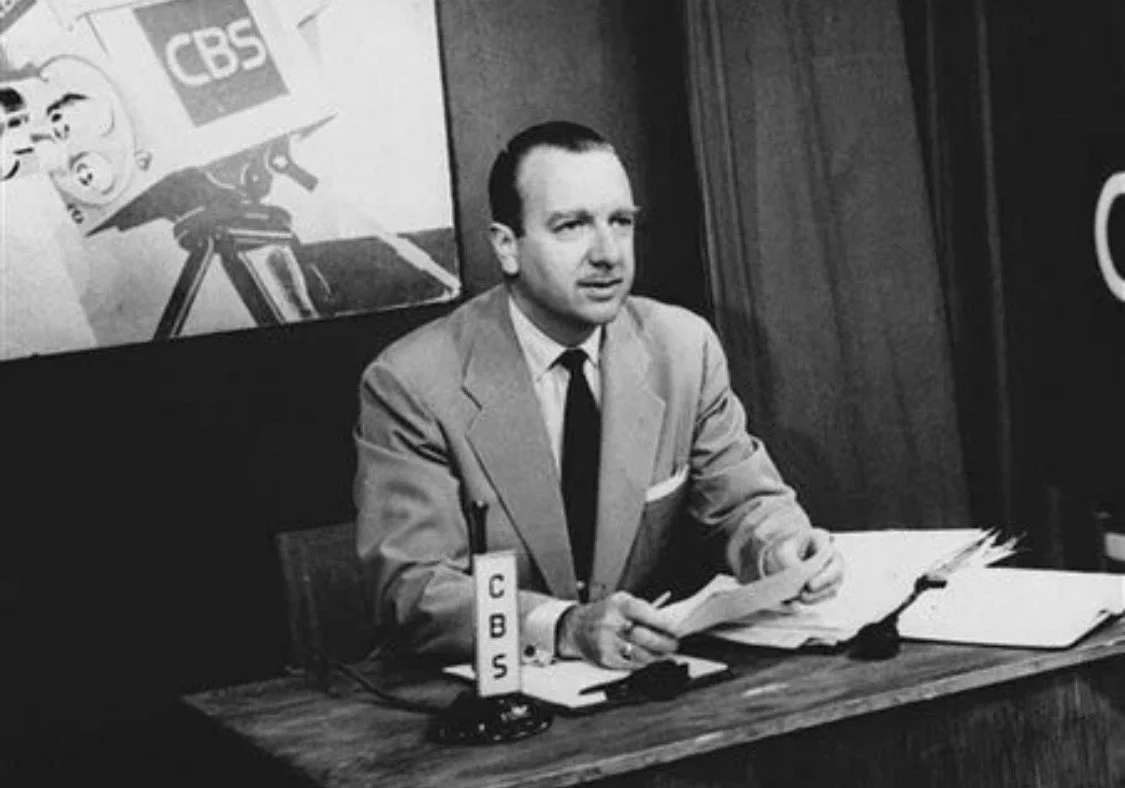
The video that stood out to me most was the CBS News broadcast marking the first 30-minute edition of the CBS Evening News. As a journalism student, I noticed not just the historical importance of expanding the broadcast, but also how it treated journalism as a public service meant to inform people deeply about the most important domestic and international issues of the time. One thing that really stood out was the program's structure: with very few commercial breaks, viewers got a full, uninterrupted half-hour of news. That focus allowed complex stories, especially those about civil rights and global conflict, to be explained in detail instead of being cut into short pieces. The in-depth interview with President John F. Kennedy was especially powerful because he addressed urgent issues directly, especially the federal government’s role in enforcing civil rights and US involvement in Viet Nam. The broadcast was so interesting and powerful to me that I took the time to research, locate, and watch other Cronkite interviews from the era, including his broadcasts on the assassination of President Kennedy, the assassination of Robert “Bobby” Kennedy, and the assasnation of Martin Luther King. There was something about the purity and raw emotion without opinion that made me want to watch more. Also, Chronkite’s use of words painted images in my head that made me want to see more.
The September 2, 1963 broadcast felt trustworthy because it took place outside of the White House, at Kennedy’s family's compound in Hyannis Port, Massachusetts. It was conversational, relaxed, and seemed truthful. It avoided sensationalism and did not add personal opinions. It focused on simply describing events, which helped viewers understand what was happening without being influenced by commentary. What stood out to me most was the focus on interviewing the real decision-maker, the President of the United States, instead of media spokespeople like we see today. Hearing directly from President Kennedy about civil rights, unemployment, chronic employment among people in coal and steel, the problems facing older workers who were left behind because of technology and younger workers, too many of whom were uneducated, and the importance of vocational education and tax cuts. Cronkite’s interview of Kennedy let the country see a Democrat who didn’t disparage Republicans like Hillary Clinton once did when she referenced some Republicans as fitting into a “basket of deplorables,” instead speaking about Republicans as the party of Lincoln.
Additionally, what makes Cronkite’s interview with President Kennedy so significant is not simply what was asked, but how it was asked. When Kennedy referred to Republicans as the party of Lincoln, those were his own words, not Cronkite’s media framing. Cronkite did not editorialize, amplify, or subtly endorse the remark. Instead, he allowed Kennedy’s language to stand on its own. That restraint is important. By refusing to insert commentary, Cronkite preserved the distinction between journalist and subject, thereby strengthening the principle that the press's role is to illuminate, not to litigate like they are in a court of law.
The same disciplined neutrality characterized his questioning about the decision to send Henry Cabot Lodge, Jr., to Saigon. Cronkite carefully noted that Lodge had been Kennedy’s “political enemy over the years.” This was an important, contextual fact. Yet, the question was delivered in a measured, non-accusatory tone: was the appointment motivated by a desire to remove Vietnam as a political liability in the 1964 election? The phrasing didn’t presumed guilt or dramatize conflict. It invited a truthful explanation. There was no melodramatic confrontation.
This approach gives rise to a sophisticated understanding of journalistic authority. By avoiding theatrical “gotcha” tactics, Cronkite elevated the discourse. The absence of spectacle was discipline. His calm, plainspoken delivery required the president to engage substantively with the issue, while allowing viewers to evaluate the exchange independently. There was no need for sensationalism because the stakes: war, domestic protest, and electoral politics, were already intense.
In that sense, the broadcast was an act of civic responsibility. Cronkite’s restraint created space for democratic deliberation. By privileging clarity over commentary and investigation over accusation, he modeled a form of journalism that strengthened citizen trust and treated the audience as capable of analyzing what Kennedy said on their own. The power of the interview is in that disciplined neutrality.
Anchored by Walter Cronkite, who used no notes during the broadcast, and whose measured authority instilled trust, the broadcast treated journalism as something serious and necessary, not performative. It showed how the press can hold politicians accountable by asking direct questions and clearly providing facts. Today, I’m not sure I can say the same about CBS. While I believed the Cronkite-era newscast because it felt grounded in independence and integrity, I’m increasingly skeptical of contemporary coverage. Viewers are now much more aware of the perceived political leanings of anchors and networks, which complicates trust in the media. There are also widening concerns that CBS has, at times, appeared to accommodate political power by softening, delaying, or sidelining stories that could be seen as critical of the Trump administration or Republican leadership. That shift stands in contrast to the earlier devotion to confronting power directly. As someone committed to social justice, I find that contrast troubling, because a functioning democracy depends on journalism that questions authority rather than adjusts itself to it.
ANSWER 2:
Broadcast news played a key role in moving the Civil Rights Movement forward by turning racial injustice from a local problem into a national moral issue. Unlike newspapers or radio, television showed Americans the reality of segregation and state violence in their own homes. By airing events as they happened, broadcast news made racial brutality clear and hard to ignore. This shift changed public opinion and put more pressure on the federal government to act.
In the spring of 1963, one hundred years after the Emancipation Proclamation and during the Kennedy administration, when civil rights had moved to the center of national debate, National Educational Television aired a live, moderated discussion on the “state of the American Negro.” Dr. Kenneth Clark hosted a panel featuring Dr. Martin Luther King Jr. of the Southern Christian Leadership Conference (SCLC), Roy Wilkins of the NAACP, Whitney Young Jr. of the National Urban League, James Farmer of the Congress of Racial Equality (CORE), and James Forman of the Student Nonviolent Coordinating Committee (SNCC). This broadcast was groundbreaking. For a national audience to see these Black leaders who were professional and unified, discussing strategy and the planned March on Washington, confronting prevailing stereotypes and legitimizing the movement’s demands. Television humanized its leadership and presented civil rights as an organized, principled campaign for constitutional equality.
Even more powerful was CBS’s May 1963 coverage of the Birmingham campaign. The network showed footage of police using fire hoses and dogs against African American children and peaceful protesters. Millions of Americans saw nonviolent people being violently attacked. An interview with Dr. King gave important context and highlighted Birmingham’s key role in ending segregation. This reporting showed injustice on screen. Watching children being hit by water hoses or attacked by dogs made it impossible to ignore the moral problem. The broadcast made it clear that segregation was a crisis for democracy and human rights, not just a local issue.ion.
On August 28, 1963, CBS covered the March on Washington, with Walter Cronkite anchoring special reports. Viewers watched hundreds of thousands gather peacefully at the Lincoln Memorial, countering Southern claims that civil rights activism produced chaos. Broadcast coverage of the funeral of the four little girls killed in the Birmingham church bombing later that year further personalized the cost of racial hatred. These televised moments deepened public sympathy and reinforced the immediacy of reform.
Soon after the March on Washington, the CBS Evening News expanded to a 30-minute format. This change showed how important television journalism had become and how big the civil rights story was. In interviews like Cronkite’s with President Kennedy about unrest in places like Tuskegee, Alabama, and Plaquemines Parish, Louisiana, broadcast journalism made political leaders answer for their actions in public. The civil rights struggle was no longer just a local issue; it was discussed on national television, and even the president had to respond.
On July 2, 1964, CBS covered President Lyndon B. Johnson signing the Civil Rights Act into law. By airing both the violence that made change necessary and the laws that followed, broadcast news created a clear story: injustice was revealed, people protested, and reform happened. Television did not start the Civil Rights Movement, but it strengthened its moral message and sped up federal action.
As a journalism student, I see how these broadcasts show the power of steady, trustworthy reporting. Broadcast news did more than just inform people; it built national empathy, gave civil rights leaders credibility, and made politicians more accountable. By making local injustice a shared national experience, television helped change public opinion and played a real part in passing new laws.
ANSWER 3:
The first 30-minute television newscast and today’s broadcasts both aim to inform the public, but watching the CBS clip shows how much the approach to news has changed. The first CBS Evening News treated journalism as a continuous, carefully organized story, not just a series of separate news blocks. Today, newscasts are divided into strict blocks like politics, crime, weather, and sports, and these blocks are shaped as much by commercials and keeping viewers as by editorial choices.
Visually, the first 30-minute broadcast was very simple compared to what we see today. The camera hardly moved, and there were no graphics or breaking-news banners to distract viewers. Also, Cronkite let President Kennedy speak and answer his questions without interruption. Filmed in black and white, the whole broadcast depended on Walter Cronkite’s voice and presence. This simplicity made the news feel serious and focused. In contrast, modern broadcasts use lots of visuals like video walls, graphics, live shots, and constant transitions. This can make the news feel faster but also more broken up.
What stood out to me most was how the Kennedy interview and all of the issues discussed were given enough time. In the first broadcast, major topics like civil rights and international affairs were treated as central and given room to be explored. Today, stories are often shortened, teased before breaks, or rearranged to keep viewers watching, which can sometimes reduce their depth and impact.
There was no dramatic music or preview of what was coming next, just a clear sense that the day’s reporting was finished. This approach was important, especially during national crises, like when just a few weeks later, Cronkite later announced President John F. Kennedy’s assassination. His visible emotion then showed his humanity while still keeping viewers’ trust.
As a college journalism student, watching this clip made me realize how much the order of asking questions, pacing, and structure affect how viewers understand the news. While today’s broadcasts are faster and more visually appealing, the first 30-minute newscast shows that clarity, restraint, and strong editorial choices can be just as powerful as speed and technology.
ANSWER 4:
After watching all three clips, it’s clear that CNN changed the news industry by completely changing both the pace and philosophy of broadcast journalism. Before CNN started in 1980, people watched television news only at certain times of day. CNN changed this by making news available all the time.
What stood out most in the first clip, which shows CNN’s launch day and early hours, was how experimental and uncertain everything looked. The broadcast didn’t look polished or authoritative like traditional network news. Instead, it felt lively and in progress. Broadcasting from Atlanta instead of New York or Washington, DC, showed a break from the usual media centers and the idea that everything revolved around the Northeast. The staff seemed aware they were trying something completely new, and that uncertainty made the moment feel historic.
The second clip focuses on the anchors, David Walker and Lois Hart, who were unusual for the time. As a husband-and-wife team, they set CNN apart from traditional network news right away. Their delivery was more conversational and less stiff than what viewers were used to in evening newscasts. Instead of sounding distant, they seemed approachable and present, which supported CNN’s goal of building a closer connection with viewers.
The third clip looks at CNN’s early editorial choices, especially its decision to start with the shooting of civil rights leader Vernon Jordan. This moment stood out to me because it showed how CNN defined “breaking news” from the start. Jordan was a well-known civil rights leader and a Howard University graduate, which connected CNN’s first big story to Black political leadership and HBCUs. By choosing this story early on, CNN showed it planned to cover issues of power, race, and national importance.
Together, these clips show that CNN’s revolution was not just about being the first to air news 24 hours a day. It was about changing what news could look like: less polished, more immediate, more open, and more responsive to events as they happened. As a journalism student, what stood out to me most was the level of risk involved. CNN didn’t wait for everything to be perfect before going live. They believed that access, urgency, and consistency were more important.
ANSWER 5:
What I learned most from “A Day in the Life of a Newsroom” is how intense, collaborative, and fast-paced the newsroom environment is, and how every role, even those behind the scenes, is essential for getting accurate news on air. The clip shows that a newsroom is not just reporters reading scripts, but a careful system where timing, communication, and trust are crucial. From early morning broadcasts to the final seconds before airtime, every decision matters, and one mistake can affect the whole show.
What stood out to me most was the role of the assignment desk and the managing editor in shaping the day’s news. After looking at overnight developments and breaking news, they choose stories and start building a rundown that changes throughout the day. This showed me that news is not just reported as it happens, but is always being re-evaluated for importance, urgency, and available resources. Editorial meetings are key to this process, bringing together producers, reporters, editors, and directors to decide which stories matter most and how to present them.
The clip also emphasized how much responsibility reporters have beyond being on camera. Reporters are expected to suggest story ideas, work with photographers, conduct interviews, write scripts under tight deadlines, and regularly check with editors for approval. This made me realize that journalism needs both independence and teamwork. Also, seeing production assistants cue video, manage scripts, and help keep the show on time showed how precise and organized a live broadcast must be. Watching directors call shots, technical directors switch visuals, and producers manage pacing showed how stressful, though rewarding, live television can be. The level of coordination required made it clear that adaptiveness and calm decision-making are just as important as journalistic skills.
The role I would feel most comfortable with is Anchor or Executive Producer. The clip showed that this job lets someone shape the editorial vision of the broadcast while managing the whole production process, which matches my interest in leadership and storytelling. I would also like working as a production assistant because it gives hands-on experience and a better understanding of how all newsroom roles fit together. Overall, the video helped me better understand how complex newsroom operations are and confirmed my interest in working in a collaborative, high-pressure journalism environment.
ANSWER 6:
After watching the episode of BET Nightly News, it was clear that the main stories focused on issues that directly affected Black communities and were often overlooked in mainstream news. The newscast covered topics like civil rights, politics, racial inequality, criminal justice, education, and international events affecting people of African descent. The show emphasized context and community impact, making the stories feel meaningful and relevant to its audience.
One of the most striking things about BET Nightly News was the anchor and the overall tone of the broadcast. Anchors like Jacque Reid and Ed Gordon delivered the news with professionalism and cultural awareness. They came across as credible, grounded, and easy to understand. Unlike traditional newscasts, which can feel distant or too formal, BET Nightly News had a conversational but authoritative style that made viewers feel included, not talked down to. The language, framing, and story choices showed a strong understanding of the audience, making the broadcast feel real and community-focused.
Another noticeable aspect was the structure of the newscast. The show balanced hard news with analysis and storytelling, supplying historical and social context. This approach helped explain not just what happened, but why it mattered, especially to Black viewers. That kind of framing is something I found especially meaningful as a journalism student because it reveals the power journalists have to shape narratives, not just report facts.
BET Nightly News aired from 2001 to 2005, which was a short run compared to other national newscasts. It was canceled mainly because of money problems, lower ratings than entertainment shows, and BET’s move toward content that executives thought would be more profitable. Producing a nightly news show is expensive, and as cable TV became more competitive, networks chose entertainment over journalism.
Today, we do not have a similar nightly news program on BET because the media scene has changed. Digital media, social media, and independent Black-owned news outlets now serve as primary sources of community-based news. Today, Roland Martin Unfiltered on the Black Star Network offers Black viewers a nationally televised, digital news program like BET Nightly News, but there is nothing similar on cable. The show’s legacy demonstrates the significance of representation in journalism and elicits questions about who gets to tell the news—and whose stories keep on being centered.
ANSWER 7:
Tamron Hall’s comments stood out to me because they were honest and confident. What I appreciated most was how she recognized the question she’s often asked about her identity, but made it clear she refuses to let that question define her career. Instead of seeing her success as unusual for a Black woman, she focused on preparation, professionalism, and knowing her worth. This perspective is especially important in an industry where Black women are often expected to explain or justify their presence.
As a journalism student, I found her comments powerful because they show that system-wide barriers still exist, even at the highest levels of broadcast news. Hall’s experience proves that talent alone is not always enough, and opportunities are not always equal. Still, she does not see herself as a victim. Instead, she focuses on her own choices, deciding how to respond when doors close and how to move forward without giving up her values.
Her departure from NBC’s Today show could have been seen as a career setback, but Hall’s comments made it clear she saw it as a turning point. Instead of waiting for another network to decide her role, she created The Tamron Hall Show, where she controls the stories and voices that are featured. This decision stood out to me because it shows a shift from just surviving in the system to building something new outside of it. It also challenges the idea that success in journalism has to follow a traditional path.
Overall, I agree with Tamron Hall’s perspective because it balances realism with empowerment. She does not ignore the challenges of being a Black woman in the media, but she also does not let those challenges limit her vision. Her comments show that journalism is not just about entering existing spaces, but also about changing them. For students like me, her story highlights the importance of confidence, adaptability, and staying true to your voice, even when the industry tries to silence it.