The Changing Role of Black Broadcast Journalists: Remembering Soldiers Without Swords and Realizing How Little Has Change
By, Logan Johns
February 9, 2026
I first watched the documentary The Black Press: Soldiers Without Swordsa couple of years ago for another journalism class. It has haunted me ever since.
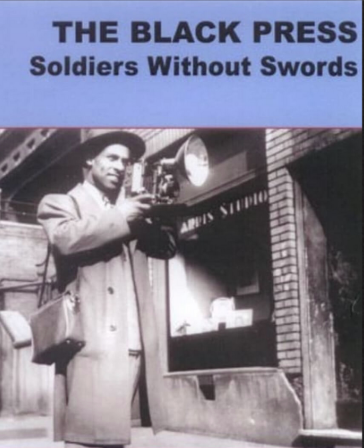
Photo via Fireflight Films
At the time, I thought of it as important, powerful, but distant history. The film documented the origins of the Black press and the death defying risks free Black men and women took to publish newspapers during slavery. Back then, I saw it as a story of the past. TheAtlanta Black Star, theSan Francisco Bay View, theChicago Defender, and theAFRO American Newspapersseemed to be doing well. Don Lemon was happy at CNN. Joy-Ann Reid had a successful program at MSNBC. Roland Martin’s digital program,Roland Martin Unfiltered, was doing extremely well. And, Black journalists like NPR’sMichel Martin were covering the news of Black life authentically and accurately. But, during Donald Trump’s second term as President of the United States, reading the PowerPoint and watching the videos for this assignment on theCivil RightsMovement, theKerner Commission,Reporting While Black, and theCrown Act made me revisit that film and the role of the Black press with new eyes. What struck me most this time was not how far we’ve come, but how much has not changed.
From the very beginning, the Black press in the United States existed as an act of resistance. Starting a Black newspaper during slavery was not just difficult, it was dangerous. Free Black men and women who dared to publish risked violence, imprisonment, and death. Laws criminalized Black literacy. Education was treated as a threat. As I explored years ago in my earlier writing on the Black press, states like North Carolina passed legislation explicitly banning the teaching of enslaved people how to read or write, with brutal punishments attached. This legal terrorism was designed to silence Black voices before they could ever reach print.
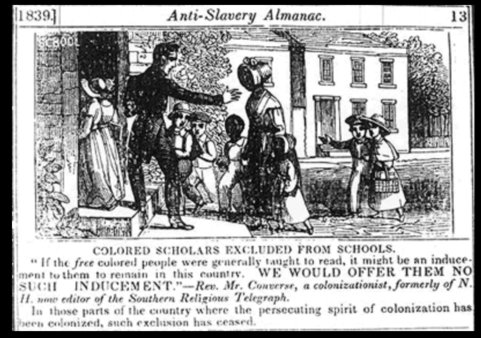
An 1839 Illustration in the Anti-Slavery Almanac of Black students excluded from school, with quote from Reverend Mr. Converse: "If the free colored people were taught to read, it would be an inducement for them to stay in the country. We would offer them no such inducement." Library of Congress via AP, Anti-Slavery Almanac, 1839
And yet, despite these barriers, Black newspapers were born. Publications like Freedom’s Journal, founded in 1827 by Samuel Cornish and John Russwurm, existed because Black leaders understood something fundamental: freedom requires communication. The Black press was necessary to build community, counter racist misrepresentation, advocate for abolition, and develop a collective Black political identity. That same understanding drives Black journalism today.
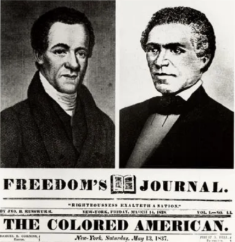
John Russwurm (left) and Samuel Cornish (right) appear alongside Freedom’s Journal headlines from 1828 and 1837. (New York Public Library, Schomburg Center for Research in Black Culture)
Watching Soldiers Without Swords again alongside this assignment made me realize that Black journalists have always been more than reporters. We have always been organizers, historians, and activists. That role did not end with slavery, nor did it end with the Civil Rights Movement.
The Kerner Commission’s 1968 report confirmed what the Black press had been saying for generations: mainstream media was failing Black America. The commission criticized newsrooms for being overwhelmingly white and for portraying Black communities as problems rather than people. Civil Rights era coverage led to some change by bringing images of brutality and resistance into American living rooms, the commission warned the nation that without structural transformation, inequality would keep breathing.
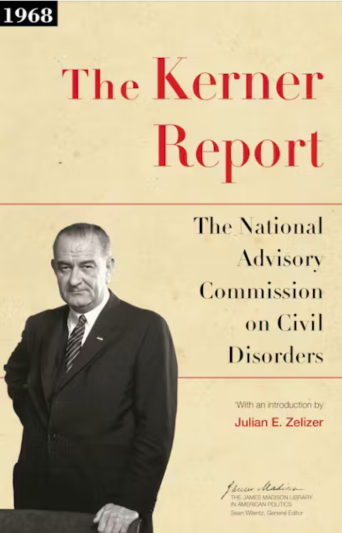
A cover of The Kerner Report (1968), formally titled The National Advisory Commission on Civil Disorders, features President Lyndon B. Johnson. (Princeton University Press)
Looking at today’s media landscape, it feels impossible not to conclude that the Kerner Commission was right. Decades later, we are still watching mainstream media fail Black communities in real time. With Donald Trump’s return to the presidency, it has become even clearer that many major news organizations are no longer invested in hiring Black journalists or consistently and accurately covering the issues that shape Black lives. When voices get too honest, too direct, or too unwilling to soften the truth, they are often pushed out.
The removals of Don Lemon from CNN and Joy-Ann Reid from MSNBC were not just personnel changes, they were warning signs. Both journalists built careers around centering race, democracy, and accountability, and both faced scrutiny and racism for doing so. Their exits sent a clear message: there are limits to how much truth Black journalists are allowed to tell in mainstream newsrooms.
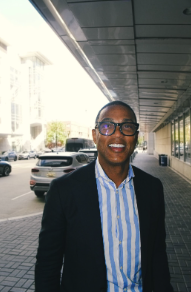
Don Lemon stands outside the Walter E. Washington Convention Center during the Congressional Black Caucus Legislative Weekend in September 2025. (Photo by Logan Johns)
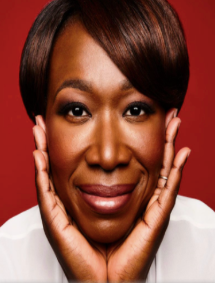
Journalist Joy-Ann Reid. (Women Rock Project)
At the same time, the political climate has grown openly hostile—not just to Black people, but to the very idea of a free press. Racist imagery, dehumanizing language, and outright disrespect toward Black leadership have been normalized in public discourse, especially online. When that kind of rhetoric circulates freely, and media institutions respond by retreating into “objectivity” instead of moral clarity, Black communities are left unprotected and unheard.
That’s why I no longer believe mainstream media alone can be trusted to tell our stories. The framing is too cautious. The silences are too loud. And the cost of speaking the truth is too high for many newsrooms to bear. In this moment, independent Black journalism isn’t just an alternative, it’s a necessity. It’s where the real stories live, where context isn’t optional, and where Black humanity doesn’t need permission to exist.
So what is the biggest issue facing Black journalists today? I believe it is institutionalized and systemic punishment for truth-telling, especially when that truth challenges power. Black journalists are welcomed into mainstream media until they refuse to soften their analysis. The work of too many Black journalists is constantly scrutinized, framed as “too political,” or labeled “biased” simply because their work is focused on Black communities and calls out racism when it is present.
As someone who works for Roland Martin, I see how this moment has pushed Black journalists toward independence. Independent Black media today is not a fallback, it is a continuation of the Black press tradition that began during slavery. When mainstream institutions fail or silence us, we build our own platforms, just as our ancestors did. Independent journalists are more important than ever in this political climate, where journalists are openly attacked, banned from press spaces, arrested, and delegitimized by those in power. The hostility toward Black journalists, especially those who challenge authoritarianism, creates real danger and chilling effects on the press.
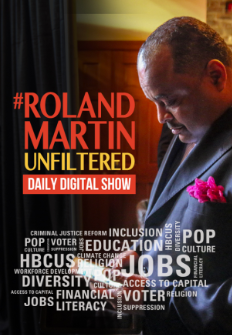
Photo via Roland Martin Unfiltered
Max Robinson and Carole Simpson shaped my understanding of what Black broadcast journalism could and should be. Robinson’s presence as the first Black network anchor challenged the idea that authority had a single look. Carole Simpson showed that Black women could lead, moderate presidential debates, and redefine professionalism on their own terms. They didn’t just break barriers, they exposed how artificial those barriers were.
Personally, I see myself making a difference by embracing journalism as art and activism. I believe photojournalism and broadcast journalism are visual and narrative forms of resistance. Images can humanize people who have been reduced to statistics. Video can preserve truth when institutions try to erase it. Like the early Black press, my work is about documentation, memory, and accountability.
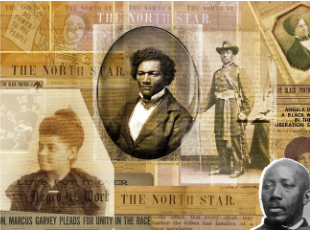
Photo via NPR.ORG
This assignment made me revisit The Black Press: Soldiers Without Swords and made something painfully clear: Black journalists are still fighting the same battle, just with different tools. From enslaved people forbidden to read, to journalists labeled “dangerous” for doing their jobs, the struggle over who gets to tell the story and how the story is told has never ended. The changing role of the Black broadcast journalist today is not about assimilation. It is about independence, courage, and legacy. We are still soldiers without swords, but still armed with the most powerful weapon of all: truth.